
You’re missing a tooth. Maybe it’s been gone for a while or it just happened. Either way, you’re probably wondering what to do next.
The good news is you have options. Two of the most common are dental implants and dental bridges. Both can give you back a complete smile. Both can help you chew and speak normally again.
But they work very differently. The right choice depends on your situation, your goals, and your budget. At DentalSpa Indianapolis, Dr. Amy Marckese has been helping patients make this decision for over 20 years. Let’s break down treatment with dental implants vs. bridges in our Indianapolis, IN, dental office.
What Is a Dental Bridge?
A dental bridge bridges the gap left by a missing tooth. The teeth on either side of the gap are shaped down to act as anchors.
Then a false tooth attaches to crowns that go over those anchor teeth. If you’re missing multiple teeth in a row, the bridge can include several false teeth. The whole piece is cemented into place.
Bridges have been around for decades. They’re a proven, reliable solution. Most bridges take just two or three visits to complete.
The pros of a bridge:
- Faster process. You can have a finished bridge in a few weeks.
- Lower upfront cost compared to implants.
- No surgery involved.
The cons of a bridge:
- The anchor teeth have to be filed down. That means removing healthy enamel.
- Bridges don’t stimulate your jawbone. Over time, the bone where the tooth is missing can start to shrink.
- They typically need to be replaced every 10 to 15 years.
- They can be harder to clean, which puts the anchor teeth at higher risk for decay.
What Is a Dental Implant?
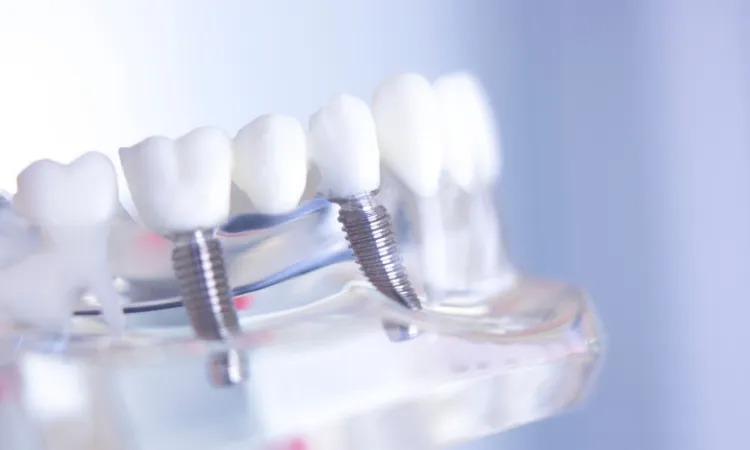
A dental implant is different. Instead of relying on neighboring teeth for support, an implant stands on its own. A tiny titanium post is surgically placed into your jawbone. Over a few months, that post fuses with the bone. It becomes a permanent part of your jaw. Once it’s fully healed, a custom crown is attached on top.
It’s the closest thing to a natural tooth you can get.
The pros of an implant:
- No healthy teeth are harmed. Your neighboring teeth stay untouched.
- Implants stimulate your jawbone. That prevents the bone loss that happens with missing teeth.
- With good care, an implant can last a lifetime.
- They look, feel, and function exactly like natural teeth.
- They’re easier to keep clean. You brush and floss them just like your other teeth.
The cons of an implant:
- The process takes longer. It can be several months from start to finish.
- The upfront cost is higher than a bridge.
- It requires a minor surgical procedure.
So Which One Should You Choose?
There’s no single right answer for everyone. But here are some general guidelines.
An implant might be the better choice if:
- You want a permanent, long-term solution.
- You don’t want to file down your healthy neighboring teeth.
- You’re in good overall health and your jawbone is strong enough to support an implant.
- You’re willing to invest more upfront for a solution that can last a lifetime.
A bridge might be the better choice if:
- You need a faster solution.
- Your budget is more limited right now.
- The teeth next to the gap already have large fillings or crowns and need work anyway.
- You have health conditions that make surgery riskier.
What to Expect at Your Consultation
If you’re not sure which option is right for you, schedule a consultation. Dr. Marckese will examine your mouth and check your bone health. She’ll also talk with you about your goals, your lifestyle, and your budget.
You’ll have time to ask questions. You’ll understand exactly what each option involves. And you’ll leave with a clear recommendation based on your unique situation.
We’ll also review your insurance coverage and financing options. We accept most major insurance plans and offer flexible payment solutions. Cost shouldn’t stand between you and a healthy smile.
Restore Your Bite Today
Both implants and bridges are excellent options. Both could restore your smile and your confidence. The key is making the choice that’s right for you.
At Dental Spa Indianapolis, Dr. Amy Marckese will walk you through both options. She’ll examine your mouth, check your bone health, and talk to you about your goals. Then she’ll recommend the solution that fits your life. And remember, whatever you choose, you’ll be comfortable. Massage chairs. Blankets. Headphones with your favorite show. We take the stress out of the decision and the procedure.
If you’re missing a tooth and wondering what to do next, give us a call. Let’s find the answer that works for you.